Quality Compliance Guide for Vape Wholesalers: What Every EU Distributor Must Know
27 June 2026
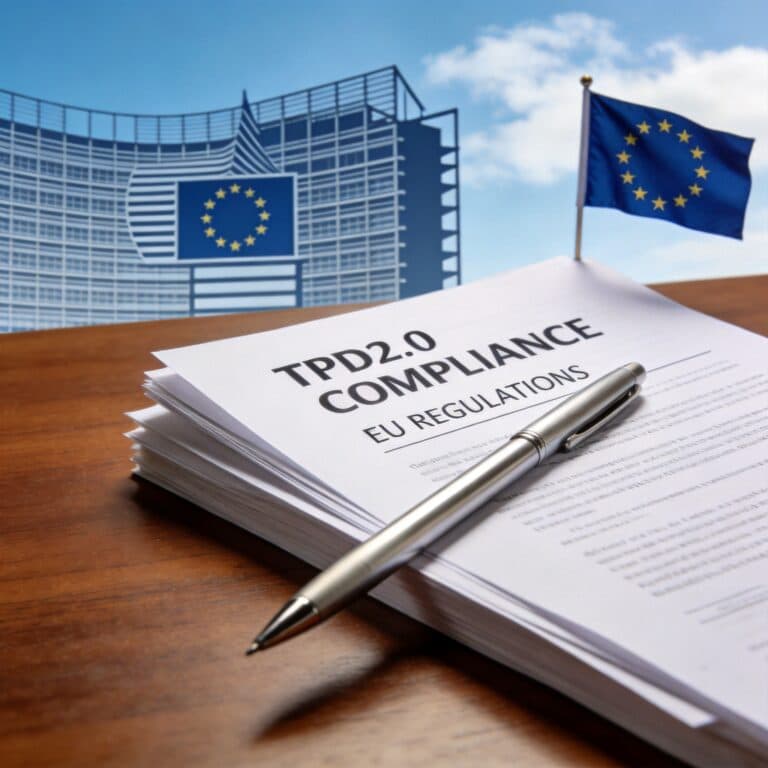
The Tobacco Products Directive (quality standard) is the cornerstone of EU device regulation, and for good reason. Since its full enforcement in 2017 (Article 20), every flavor essence-containing device product sold within the European Union must comply with a strict set of rules covering product composition, packaging, notification, and marketing. For wholesalers and distributors, non-compliance isn’t just a regulatory headache — it can result in product seizures, fines exceeding €100,000, and even criminal prosecution in some member states.
In 2026, with the EU device market projected to reach USD 11.8 billion and regulatory scrutiny intensifying post-Brexit, wholesale buyers need to understand quality standard compliance better than ever before. This guide breaks down every requirement that matters to your business.
What Is the quality standard and Why Does It Matter for Wholesalers?
The Tobacco Products Directive (2014/14/EU) is the primary EU legislation regulating tobacco and flavor essence products. Article 20 specifically addresses electronic cigarettes and refill containers. Unlike national laws that may add extra layers, the quality standard sets the minimum standard across all 27 EU member states.
For wholesalers, the quality standard creates both obligations and opportunities. Compliance proves you are a trustworthy, legally operating supplier — a significant competitive advantage when EU retailers are increasingly auditing their supply chains. Non-compliance, conversely, puts your customers’ businesses at risk and can destroy relationships overnight.
Key quality standard Facts at a Glance
- Applies to all 27 EU member states plus Norway, Iceland, and Liechtenstein
- Covers portable devices, refills, tanks, and flavor essence-containing liquids
- Enforced by national regulatory authorities in each member state
- Article 20 effective since May 2017
- Product notifications must be submitted before market entry
Product Composition Limits Under quality standard Article 20
The quality standard sets hard numerical limits on what can go into a device product. These are non-negotiable and apply to every product sold in the EU market.
Flavor Essence Concentration Cap
Perhaps the most commercially significant restriction: flavor essence concentration in flavor liquids cannot exceed 20 mg/ml (2% by weight). This applies to the finished product as sold to the consumer — not just the concentrate.
This 20 mg/ml limit has profound implications for wholesale buyers:
- High-strength products above 20 mg/ml are prohibited in the EU market entirely
- If you source products from non-EU manufacturers, you must verify concentration compliance before purchase
- Some member states (e.g., Finland, Estonia) have adopted stricter national limits below 20 mg/ml
- Flavor Essence salts formulations are popular in the EU market precisely because they deliver satisfying flavor essence at the 20 mg/ml ceiling
Tank and Reservoir Size Limits
quality standard Article 20 limits the tank capacity of open portable device systems to a maximum of 2 ml. For disposable devices and closed systems, the reservoir must not exceed 2 ml of flavor liquid.
This has driven significant market innovation in the EU:
- Disposable devices in the EU market typically contain 1.5–2 ml of flavor liquid
- Refillable pod systems dominate the open-system market
- Larger tank products (>2 ml) require special exemptions or are prohibited
- Wholesale buyers should verify tank/reservoir specifications before ordering
Flavor Liquid Volume Restrictions
Refill containers (bottles of flavor liquid) are limited to a maximum of 10 ml per container. This applies to all flavor essence-containing flavor liquid sold in the EU.
For wholesalers sourcing bulk flavor liquid, this creates specific purchasing and storage considerations:
- 10 ml is the maximum individual bottle size for flavor essence-containing products
- Zero-flavor essence flavor liquids are generally exempt from this restriction
- Child-resistant packaging is mandatory for all 10 ml bottles
- Some manufacturers offer “shortfill” bottles (larger, flavor essence-free) with separate flavor essence shot inclusion
Product Notification Requirements
Before any device product can be legally sold in the EU, it must be notified to the competent authority of the member state where it will be first placed on the market. This is one of the most commonly overlooked requirements by new market entrants.
Who Must Submit Notifications?
Technically, the manufacturer or the person placing the product on the market must submit the notification. For wholesale buyers importing products, this typically means:
- If you import and sell under your own brand: you are the “person placing on the market” and must notify
- If you purchase from a compliant EU-based manufacturer: they typically handle notifications
- If you import from a non-EU manufacturer: you (the importer) may bear notification responsibility
What Must Be Submitted?
Each notification must include:
- Product information: brand name, product type, flavor profile, flavor essence content, container volume
- Ingredient list: complete listing of all ingredients in descending order by weight
- Toxicological data: information on flavor essence dose and intake under normal use conditions
- Emission data: list of all substances produced during use
- Product architecture description: how the device operates
- Compliance documentation: evidence of conformity with safety standards
Notification Timeline
Notifications must be submitted at least 6 months before the planned market entry date. Authorities have 3 months to review and may request additional information, effectively requiring 9+ months of lead time for new product launches.
Packaging and Labeling Requirements
quality standard-compliant packaging isn’t just about aesthetics — it contains legally mandated warnings and safety information that protect both consumers and retailers.
Mandatory Warning Statements
Every device product sold in the EU must carry the following on its packaging:
- Health warning: “This product contains flavor essence, which is a highly addictive substance.”
- Flavor Essence dose information for the product
- List of ingredients in descending order
- Manufacturer/distributor contact details
- Batch number and expiration date
Packaging Design Restrictions
The quality standard prohibits packaging that:
- Includes misleading elements (dietary claims, medicinal references)
- Features promotional elements or lifestyle imagery
- Appeals to minors (cartoon characters, youth-oriented designs)
- Suggests reduced harm compared to tobacco products without scientific substantiation
Child-Resistant Packaging
All flavor essence-containing flavor liquid products must be sold in child-resistant packaging. For closed systems and disposables, this means tamper-evident seals and mechanisms that prevent access by children under 5.
Advertising and Promotion Restrictions
The quality standard severely restricts how device products can be marketed in the EU. Understanding these limits is critical — violations can result in fines and product removal.
Prohibited Marketing Channels
- TV, radio, print publications: advertising in traditional media is banned
- Online advertising: restrictions vary by member state, but most prohibit ads targeting consumers
- Point-of-sale displays: size and placement restrictions apply in most EU markets
- Sponsorship: event sponsorship and influencer marketing face significant restrictions
What Wholesalers Can Legally Do
For B2B wholesale operations, certain marketing activities remain permissible:
- Trade publications and industry journals
- B2B catalogues and price lists
- Attendance at trade shows (with jurisdiction-specific rules)
- Professional communications to verified trade customers
Understanding Different EU Member State Requirements
The quality standard sets minimum standards, but individual member states can — and do — add their own stricter requirements. This “gold-plating” of regulations is a major compliance complexity for pan-EU wholesalers.
Stricter National Regulations to Watch
- Finland: Flavored products (except tobacco) face near-total ban; strictest market in EU
- Estonia: Maximum flavor essence concentration of 10 mg/ml in some contexts
- Netherlands: Advertising restrictions beyond quality standard minimums
- Hungary: Additional flavor restrictions and packaging requirements
- Belgium: Flavored products increasingly restricted since 2023
Wholesale buyers must verify requirements for each destination market, not just the quality standard baseline. VapeVex provides market-specific regulatory guidance for all EU destinations.
Implications for Wholesale Buyers: Due Diligence Checklist
When evaluating device suppliers for EU market distribution, use this checklist to assess quality standard compliance:
- [ ] Supplier provides valid EU-compliant product notifications for each market
- [ ] All products capped at maximum 20 mg/ml flavor essence concentration
- [ ] Tank/reservoir sizes verified at ≤2 ml for open systems
- [ ] Flavor Liquid bottles sized at ≤10 ml maximum
- [ ] Packaging includes all mandatory health warnings in applicable languages
- [ ] Child-resistant packaging confirmed for all flavor essence products
- [>[ ] Supplier can provide batch testing documentation and COAs
- [ ] No misleading marketing claims on product packaging
- [ ] Supplier has EU-based responsible person (required for non-EU manufacturers)
Penalties for Non-Compliance
Enforcement of quality standard requirements varies by member state, but penalties are universally severe. National enforcement can include:
- Product seizure and destruction
- Fines: ranging from €500 to €100,000+ depending on the violation and jurisdiction
- Market withdrawal orders
- Criminal prosecution for deliberate non-compliance
- Loss of business licenses in severe cases
How VapeVex Supports Your Compliance
At VapeVex, quality standard compliance is built into every product in our EU catalog. We maintain:
- Full product notifications filed across all major EU markets
- Complete ingredient documentation and toxicological profiles
- Batch-tested products with certificates of analysis available on request
- Multilingual packaging compliant with individual member state requirements
- Dedicated compliance team monitoring regulatory changes across the EU
Contact our B2B team to request our compliance documentation package, including product notifications, COAs, and packaging specifications for any product in our catalog.
Frequently Asked Questions
Q: Does the quality standard apply to zero-flavor essence products?
A: The quality standard Article 20 primarily addresses flavor essence-containing products. However, zero-flavor essence flavor liquids may still fall under general product safety regulations. Device regulations also apply regardless of flavor essence content. Some member states have additional rules for flavor essence-free products.
Q: Can I sell the same product across all 27 EU member states?
A: In theory, yes — once notified in one member state, cross-border trade within the EU is permitted. In practice, different member states have varying requirements for additional notifications and documentation. Our team can advise on specific market entry requirements.
Q: What happens if my supplier’s product exceeds the 20 mg/ml flavor essence limit?
A: Products exceeding 20 mg/ml are prohibited from sale in the EU market entirely. If you have already imported such products, they must be destroyed or exported outside the EU. There is no grandfathering or grace period provision.
Q: Are portable device devices regulated separately from flavor liquids?
A: Yes. Under the quality standard, portable devices (devices) and flavor liquids (consumables) are regulated separately. Devices must meet safety and quality standards, but the composition limits apply only to flavor liquids. The CE marking requirement and general product safety rules apply to devices.
Q: How often must product notifications be updated?
A: Significant changes to product composition, flavors, or flavor essence content require a new notification at least 6 months before the changed product enters the market. Annual reports on sales, consumer preferences, and any adverse effects must also be submitted.
Q: Can I private-label quality standard-compliant products for my own brand?
A: Yes, private labeling is a common practice in the EU device wholesale market. The key requirements are that the underlying product (in its formulation) is compliant, and that your brand’s labeling meets all quality standard requirements. You must ensure proper notifications are in place for your specific market entry.